
You started your business because you’re good at what you do — not because you love tracking expenses or reconciling bank statements. That’s completely normal. But there’s one bookkeeping mistake that quietly costs small business owners thousands of dollars every single year, and most don’t even realize they’re making it.
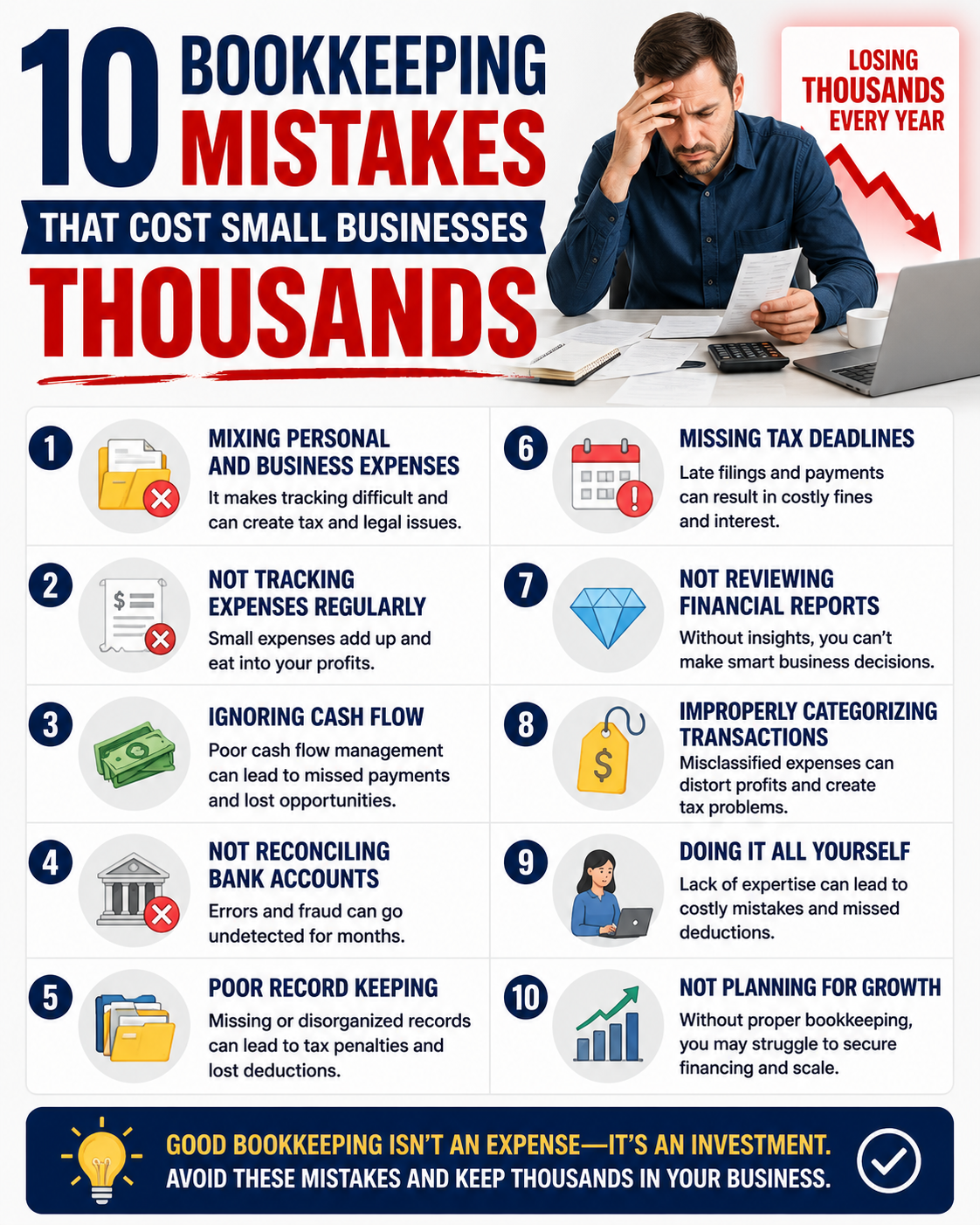
The mistake? Mixing personal and business finances.
It sounds simple. It sounds like something you’d never do. But in the early days of running a business — when you’re wearing every hat and moving fast — it happens to almost everyone. You use your personal card to grab supplies. You pay yourself out of the business account without recording it properly. You use the business account for a personal purchase because it was the card in your hand.
And just like that, your books are a mess.
Why This One Mistake Causes So Many Problems
When your personal and business finances are tangled together, a chain reaction of problems follows — most of which don’t show up until the worst possible moment (like tax time or when you’re trying to get a business loan).
1. You Can’t Trust Your Financial Reports
Your Profit & Loss report is supposed to tell you whether your business is actually making money. But if personal expenses are mixed in — your Netflix subscription, a family dinner charged to the business card, your personal car payment — your numbers are wrong. You might think you’re profitable when you’re not, or you might be underestimating your real profit because personal income got mixed in too.
Bad numbers lead to bad decisions. Period.
2. You Lose Tax Deductions You’re Entitled To
When everything is mixed together, it becomes nearly impossible to identify which expenses are legitimate business deductions. Most business owners in this situation do one of two things: they claim everything (risky), or they give up and claim almost nothing (expensive).
The IRS allows deductions for legitimate business expenses — home office, mileage, supplies, software subscriptions, professional development, and more. But if you can’t clearly separate those from personal spending, those deductions disappear. For many small business owners, that’s anywhere from $3,000 to $10,000 in missed deductions every year.
3. Tax Season Becomes a Nightmare
Every February and March, accountants across the country sit across from small business owners handing over shoeboxes of receipts and bank statements with personal and business transactions all mixed together. The hours it takes to sort through that mess? You’re paying for every single one of them.
Clean books that clearly separate personal from business can cut your accounting fees significantly — sometimes by half. And they eliminate the panic that sets in when your accountant calls and says, “We need to talk about your records.”
4. You Put Yourself at Legal Risk
If you operate as an LLC or corporation, one of the biggest legal protections you have is what’s called the “corporate veil” — the legal separation between you personally and your business. If you’re sued, your personal assets (your home, your savings, your personal bank accounts) are generally protected.
But here’s the thing: courts can “pierce the corporate veil” if they find that you treated your business and personal finances as the same thing. Mixing funds is one of the fastest ways to lose that protection. In a lawsuit, you could suddenly be personally liable for business debts or damages — not just the business.
5. You Can’t Get Business Financing
Thinking about a business loan, a line of credit, or an SBA loan at some point? Lenders want to see clean business financials — ideally 2 to 3 years of them. If your books are mixed with personal transactions, they can’t get a clear picture of your business income and expenses. That means a higher chance of rejection, or worse, loan terms that don’t reflect your business’s true financial health.
How to Fix It — Even If You’re Already Behind
If you’ve been mixing personal and business finances, don’t panic. This is fixable. Here’s how to clean it up and prevent it from happening again.
Step 1: Open a Dedicated Business Checking Account
If you don’t have one, this is your first move. A separate business checking account is non-negotiable. Every dollar of business income goes in. Every business expense comes out. Your personal finances never touch it.
Most banks offer free or low-cost business checking accounts. This single step makes everything else easier.
Step 2: Get a Business Credit Card
A business credit card does two things: it keeps your business spending completely separate, and it creates a clean record of every expense. Most business cards also categorize expenses automatically, which makes bookkeeping far simpler.
Use your personal card for personal things. Use your business card for business things. The separation is that simple.
Step 3: Pay Yourself Properly
One of the most common mixing mistakes is paying yourself informally — pulling money from the business account whenever you need it. Instead, set up a formal process:
- Sole proprietors and single-member LLCs: Take an owner’s draw on a set schedule (weekly, biweekly, or monthly). Record it as an owner’s draw, not an expense.
- S-Corps: Pay yourself a reasonable salary through payroll. This also has significant tax advantages.
Consistent, documented payments to yourself keep your books clean and your finances predictable.
Step 4: Clean Up Your Existing Books
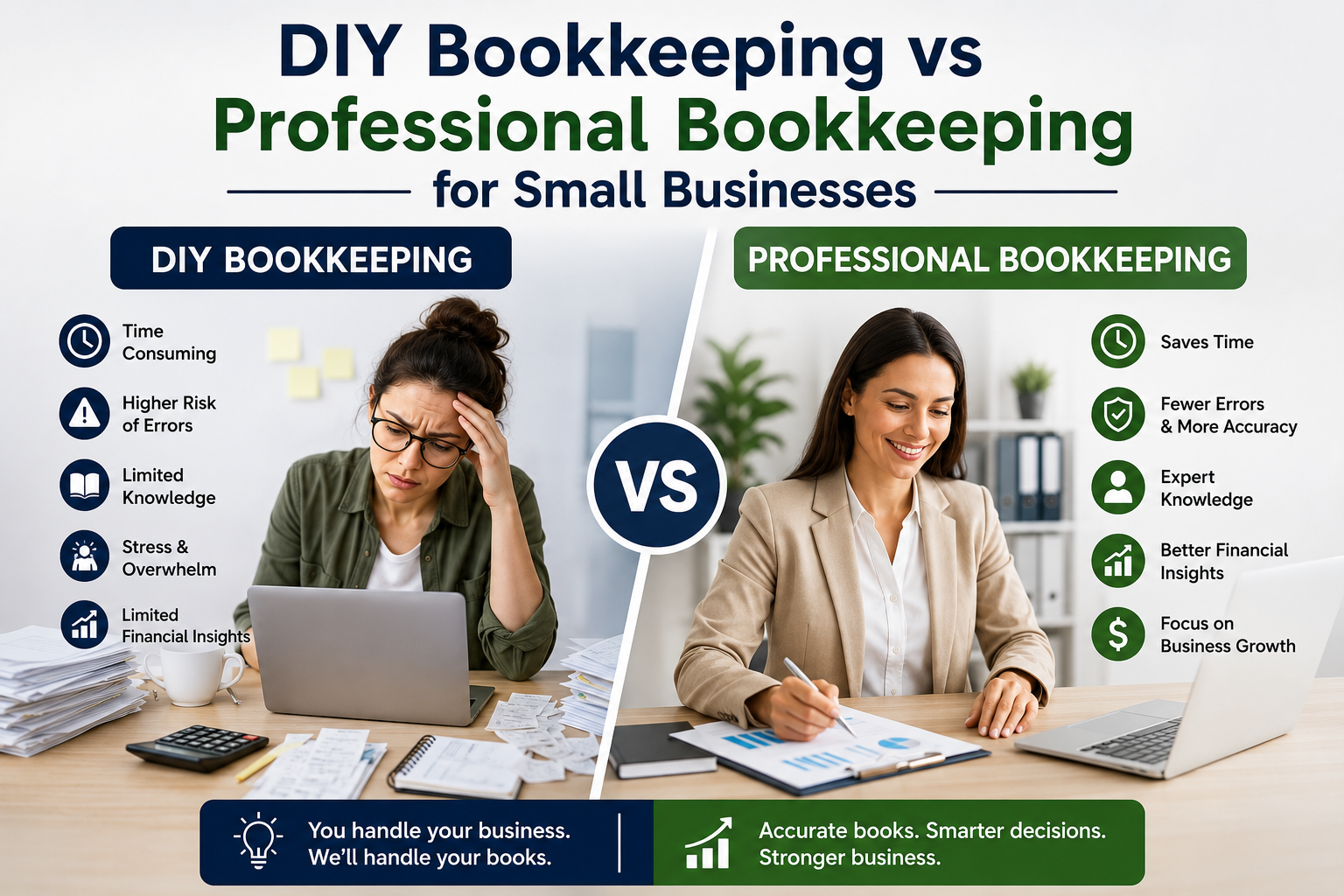
If you’ve been mixing for months (or years), the books need to be sorted out before you can move forward with clean records. This is what bookkeeping cleanup services are for. A professional bookkeeper can go back through your records, recategorize transactions correctly, and get your books into a state where they actually reflect reality.
Yes, it’s work upfront. But once it’s done, you’ll have an accurate baseline — and you’ll never have to start from scratch again.
Step 5: Use QuickBooks to Stay Organized Going Forward
Once your accounts are separated and your books are clean, QuickBooks makes it easy to stay that way. Connect your business bank account and business credit card, and transactions will import automatically. You can set rules to categorize recurring expenses so they’re sorted without you having to touch them.
At Thank Heavens Bookkeeping, we help small business owners set up QuickBooks the right way from the start — so the system works for you, not against you.
The Real Cost of Waiting
Every month you delay fixing this problem, the cleanup gets bigger. Transactions pile up. Tax deductions get harder to identify. The risk to your legal protection grows. And the stress that comes with messy books quietly drains energy you could be putting into your business.
The good news is that getting organized doesn’t have to be overwhelming. With the right system in place — separate accounts, clean records, and a bookkeeper who stays on top of things — you’ll spend less time on your finances and more time running your business.
Ready to Clean Up Your Books?
If you recognize your situation in any of what we’ve described above, you’re not alone — and you don’t have to figure this out by yourself. At Thank Heavens Bookkeeping, we specialize in helping small business owners in Hanover, PA and across the country get their books clean, organized, and ready for whatever comes next — whether that’s tax season, a loan application, or simply knowing where your business actually stands.
Call us at (717) 965-0680 or visit thankheavensbookkeeping.com/contact to get started with a free consultation.
Your finances deserve to be as strong as your business. Let’s make that happen.
Thank Heavens Bookkeeping provides bookkeeping, payroll, accounts receivable, accounts payable, and cleanup services for small businesses in Hanover, PA, York, PA, Lancaster, PA, Harrisburg, PA, and remotely across the United States.