
Many small business owners start by managing their own bookkeeping.
At first, it may seem manageable to:
- track expenses,
- organize receipts,
- send invoices,
- and monitor transactions independently.
For newer businesses with limited financial activity, DIY bookkeeping can appear like a practical way to reduce operational costs.
However, as businesses grow, bookkeeping often becomes more time-consuming and financially complex than expected.
Managing:
- payroll,
- cash flow,
- reconciliations,
- tax preparation,
- accounts receivable,
- and accounts payable
requires consistency and accuracy throughout the year.
This is why many business owners eventually ask:
Should I continue with DIY bookkeeping or hire a professional bookkeeper?
The answer depends on:
- business size,
- transaction volume,
- financial complexity,
- growth stage,
- and the amount of time available for managing financial records properly.
At Thank Heavens Bookkeeping, many businesses across:
- York
- Lancaster
- Harrisburg
- Bel Air
- Westminster
- Frederick
- and Towson
initially attempt DIY bookkeeping before realizing that professional bookkeeping support can improve financial organization, reporting accuracy, and long-term operational efficiency.
Understanding the advantages and limitations of both options can help businesses choose the right financial management approach.
What Is DIY Bookkeeping?
DIY bookkeeping means managing your own financial records without hiring a professional bookkeeper.
Business owners typically use accounting software such as:
- QuickBooks
- Xero
- FreshBooks
- or Wave
to:
- track income,
- categorize expenses,
- send invoices,
- monitor payments,
- and review reports.
DIY bookkeeping is common among:
- freelancers,
- startups,
- solo entrepreneurs,
- and very small businesses.
While accounting software has become more accessible in 2026, software alone does not eliminate bookkeeping mistakes.
Accurate bookkeeping still requires:
- regular reconciliations,
- financial oversight,
- transaction accuracy,
- and organized reporting.
Without consistency, DIY bookkeeping can eventually create financial confusion instead of improving organization.
Benefits of DIY Bookkeeping
DIY bookkeeping offers several advantages for businesses with simple financial activity.
Lower Upfront Costs
The biggest reason businesses choose DIY bookkeeping is cost savings.
Instead of paying monthly bookkeeping fees, business owners handle financial tasks independently using accounting software.
For businesses with:
- low transaction volume,
- no employees,
- and simple reporting needs,
DIY bookkeeping may temporarily reduce expenses.
Greater Financial Visibility
Managing bookkeeping internally can help business owners stay closely connected to:
- spending habits,
- incoming revenue,
- recurring expenses,
- and operational costs.
Reviewing financial activity regularly often improves awareness of business performance.
Flexible Financial Management
DIY bookkeeping allows businesses to manage financial tasks on their own schedule without relying on outside support.
This flexibility appeals to many smaller businesses during the early growth stages.
Challenges of DIY Bookkeeping
While DIY bookkeeping may appear cost-effective initially, many businesses encounter challenges as operations expand.
Increased Risk of Errors
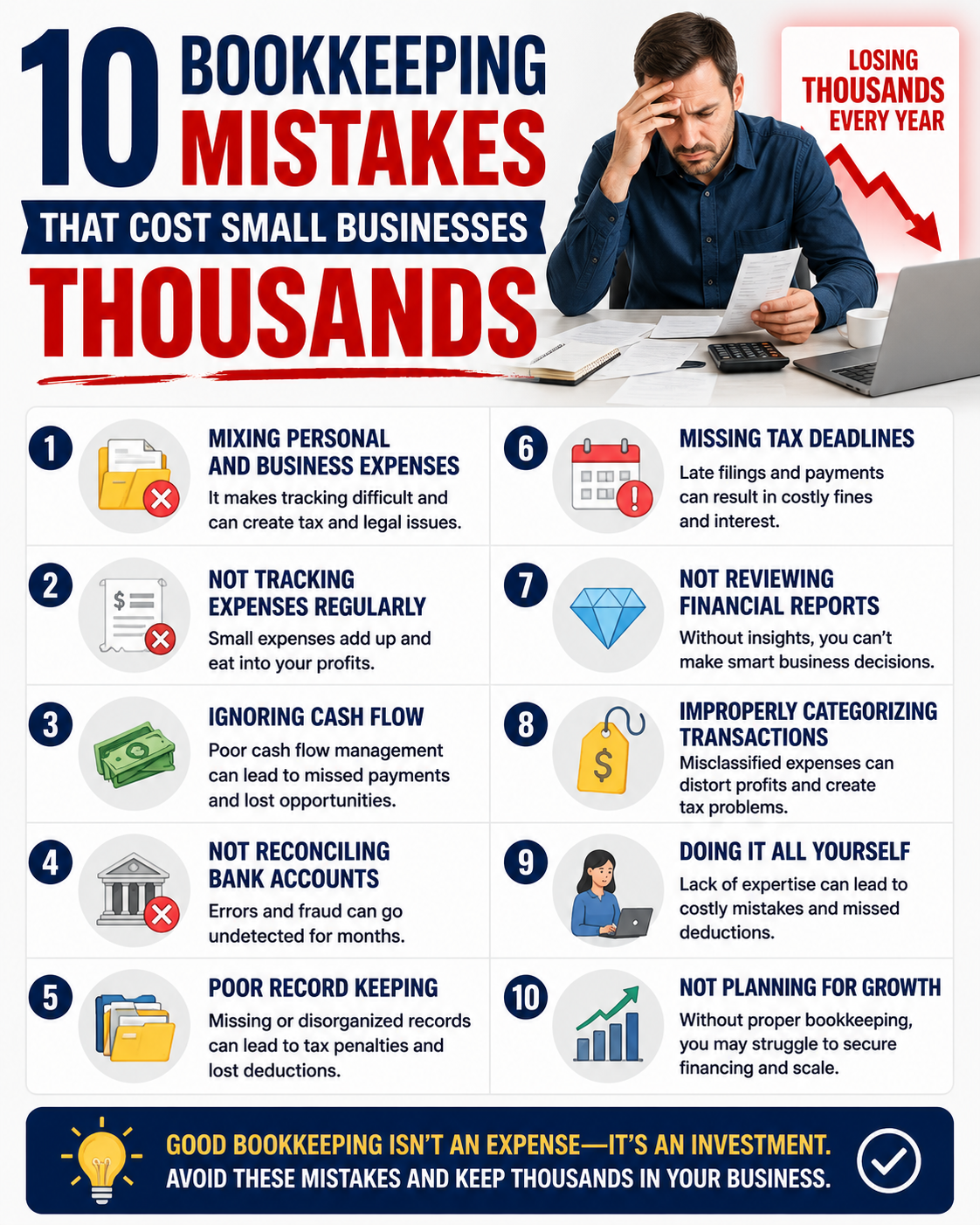
Bookkeeping mistakes are common when financial management is handled without professional oversight.
Errors involving:
- transaction categorization,
- reconciliations,
- payroll,
- or tax preparation
can create larger financial problems later.
Even small mistakes may eventually lead to:
- inaccurate reports,
- cash flow confusion,
- missed deductions,
- or tax penalties.
Time-Consuming Responsibilities
Bookkeeping requires ongoing attention throughout the year.
Many business owners spend hours every week:
- organizing receipts,
- reviewing statements,
- following up on invoices,
- reconciling accounts,
- and correcting financial errors.
This time often pulls attention away from:
- sales,
- operations,
- customer service,
- and business growth.
As financial activity increases, bookkeeping responsibilities become significantly more demanding.
Difficulty Managing Payroll and Taxes
Payroll and tax preparation are two areas where DIY bookkeeping often becomes difficult.
Managing:
- payroll taxes,
- employee wages,
- deductions,
- and compliance reporting
requires accuracy and consistency.
Without organized bookkeeping systems, tax season can become stressful and time-consuming.
This is one reason many businesses eventually seek professional payroll services and tax-ready bookkeeping support.
What Does a Professional Bookkeeper Do?
A professional bookkeeper manages and organizes business financial records consistently throughout the year.
Professional bookkeeping services often include:
- transaction categorization,
- reconciliations,
- expense tracking,
- payroll support,
- financial reporting,
- accounts receivable,
- accounts payable,
- and tax-ready paperwork.
Bookkeepers help businesses maintain cleaner financial systems while improving overall visibility into business performance.
Professional bookkeeping also reduces the likelihood of financial errors that commonly occur with inconsistent recordkeeping.
Benefits of Hiring a Professional Bookkeeper
Hiring a professional bookkeeper offers several long-term advantages for growing businesses.
Improved Financial Accuracy
Professional bookkeepers maintain:
- organized records,
- consistent reconciliations,
- and accurate reporting systems.
This helps businesses reduce:
- reporting errors,
- financial discrepancies,
- and operational confusion.
Accurate bookkeeping improves decision-making because businesses can rely on cleaner financial data.
Better Cash Flow Visibility
Many businesses struggle with cash flow simply because financial tracking lacks consistency.
Professional bookkeeping helps businesses monitor:
- income,
- expenses,
- unpaid invoices,
- recurring costs,
- and operational spending patterns.
This creates better financial visibility and helps businesses identify problems earlier.
Reduced Stress During Tax Season
Businesses with organized bookkeeping systems are generally better prepared for tax filing.
Professional bookkeeping helps maintain:
- categorized expenses,
- organized records,
- accurate reports,
- and cleaner documentation throughout the year.
This reduces:
- last-minute financial cleanup,
- missing paperwork,
- and tax preparation stress.
More Time for Business Growth
One of the biggest advantages of outsourcing bookkeeping is time savings.
Instead of spending hours managing financial records, business owners can focus on:
- customer relationships,
- sales,
- operations,
- team management,
- and growth strategies.
For many businesses, this operational efficiency alone makes professional bookkeeping worthwhile.
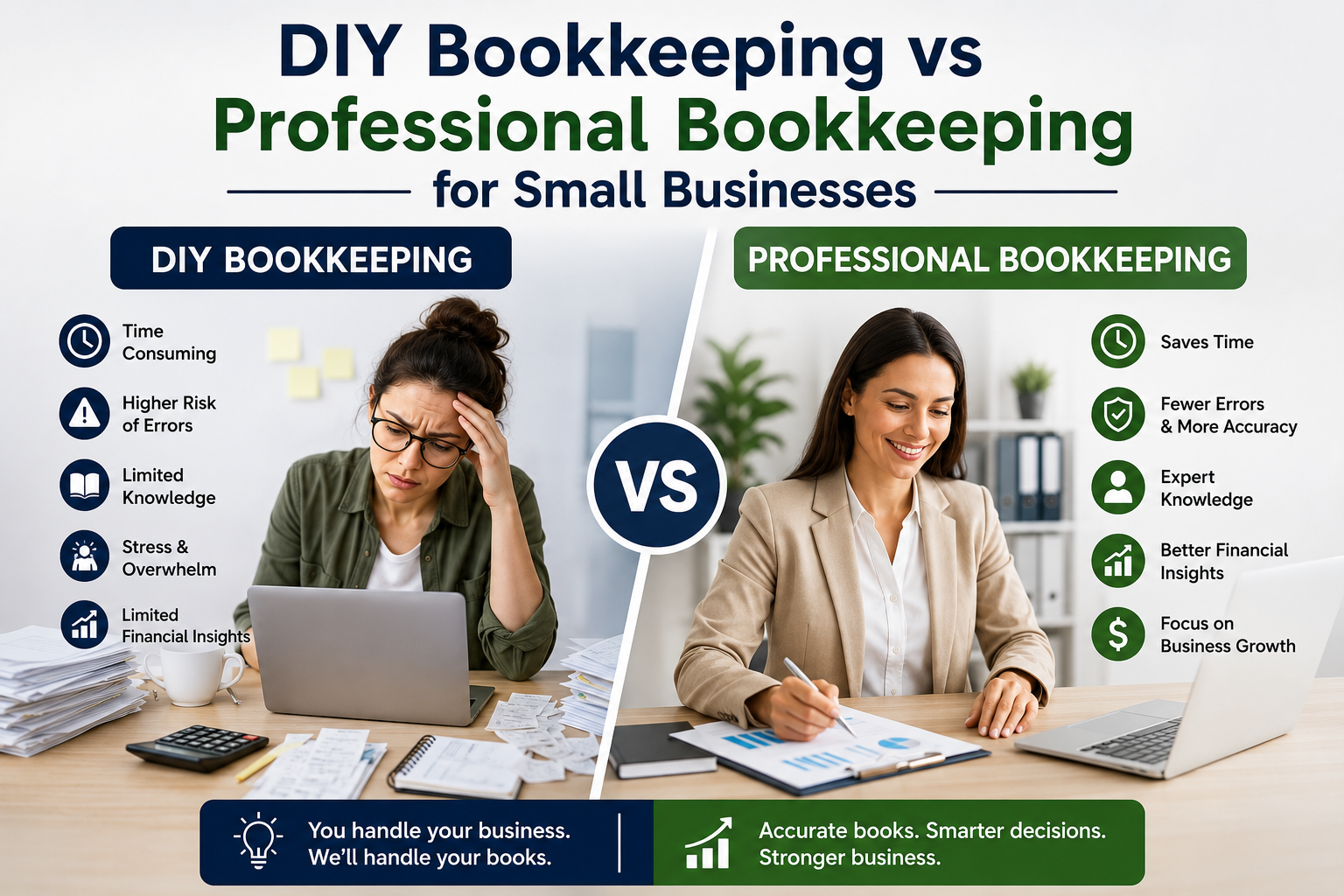
DIY Bookkeeping vs Professional Bookkeeping Comparison
| DIY Bookkeeping | Professional Bookkeeping |
| Lower upfront cost | Greater financial accuracy |
| Time-consuming | Saves business time |
| Higher risk of errors | Organized reporting systems |
| Limited scalability | Supports business growth |
| Manual oversight required | Professional financial management |
| Stressful during tax season | Tax-ready paperwork year-round |
When Should a Business Hire a Professional Bookkeeper?
Many businesses benefit from professional bookkeeping once financial activity becomes more complex.
Common signs include:
- falling behind on bookkeeping,
- struggling with payroll,
- inconsistent financial reports,
- cash flow confusion,
- tax preparation stress,
- or difficulty managing invoices and expenses.
Businesses experiencing growth often require more structured financial systems to maintain operational clarity.
Professional bookkeeping becomes especially valuable for:
- contractors,
- retail businesses,
- healthcare providers,
- restaurants,
- agencies,
- and eCommerce companies with higher transaction volume.
Why Outsourced Bookkeeping Continues to Grow in 2026
In 2026, more businesses are outsourcing bookkeeping because financial management demands have increased significantly.
Professional bookkeeping support helps businesses:
- improve reporting accuracy,
- reduce administrative workload,
- maintain cleaner financial records,
- and support long-term growth planning.
At Thank Heavens Bookkeeping, businesses receive support for:
- bookkeeping services
- clean up services
- payroll services
- accounts receivable
- accounts payable
- and tax-ready paperwork
These services help businesses maintain stronger financial organization while reducing the operational stress of handling everything internally.
Frequently Asked Questions
Is DIY bookkeeping good for small businesses?
DIY bookkeeping may work for small businesses with simple finances and low transaction volume, but growing businesses often require professional support.
What are the risks of DIY bookkeeping?
DIY bookkeeping can lead to:
- reporting errors,
- missed deductions,
- tax issues,
- payroll mistakes,
- and inaccurate financial records.
Why hire a professional bookkeeper?
Professional bookkeepers help businesses maintain organized financial systems, improve reporting accuracy, and reduce operational stress.
Can bookkeeping software replace a bookkeeper?
Accounting software helps automate tasks, but software still requires accurate setup, oversight, reconciliations, and financial review.
When should a business outsource bookkeeping?
Businesses should consider outsourcing bookkeeping when financial management becomes time-consuming, disorganized, or difficult to maintain accurately.
Final Thoughts
DIY bookkeeping can be a practical option for startups and businesses with simple financial needs, but as your business grows, managing finances accurately becomes more challenging. Hiring a professional bookkeeper helps ensure organized records, accurate reporting, better cash flow management, and stress-free tax preparation. Investing in professional bookkeeping allows you to spend less time on paperwork and more time growing your business with confidence.