

Many small business owners initially try to manage bookkeeping themselves to reduce operational expenses. While this approach may seem cost-effective at first, it often becomes difficult as financial activity grows.
Business owners already manage:
- customer service,
- operations,
- sales,
- staffing,
- scheduling,
- and day-to-day decision-making.
Adding bookkeeping responsibilities on top of that can quickly become overwhelming.
DIY bookkeeping may work temporarily for:
- freelancers,
- solo entrepreneurs,
- or very small startups,
but growing businesses usually require more organized financial systems.
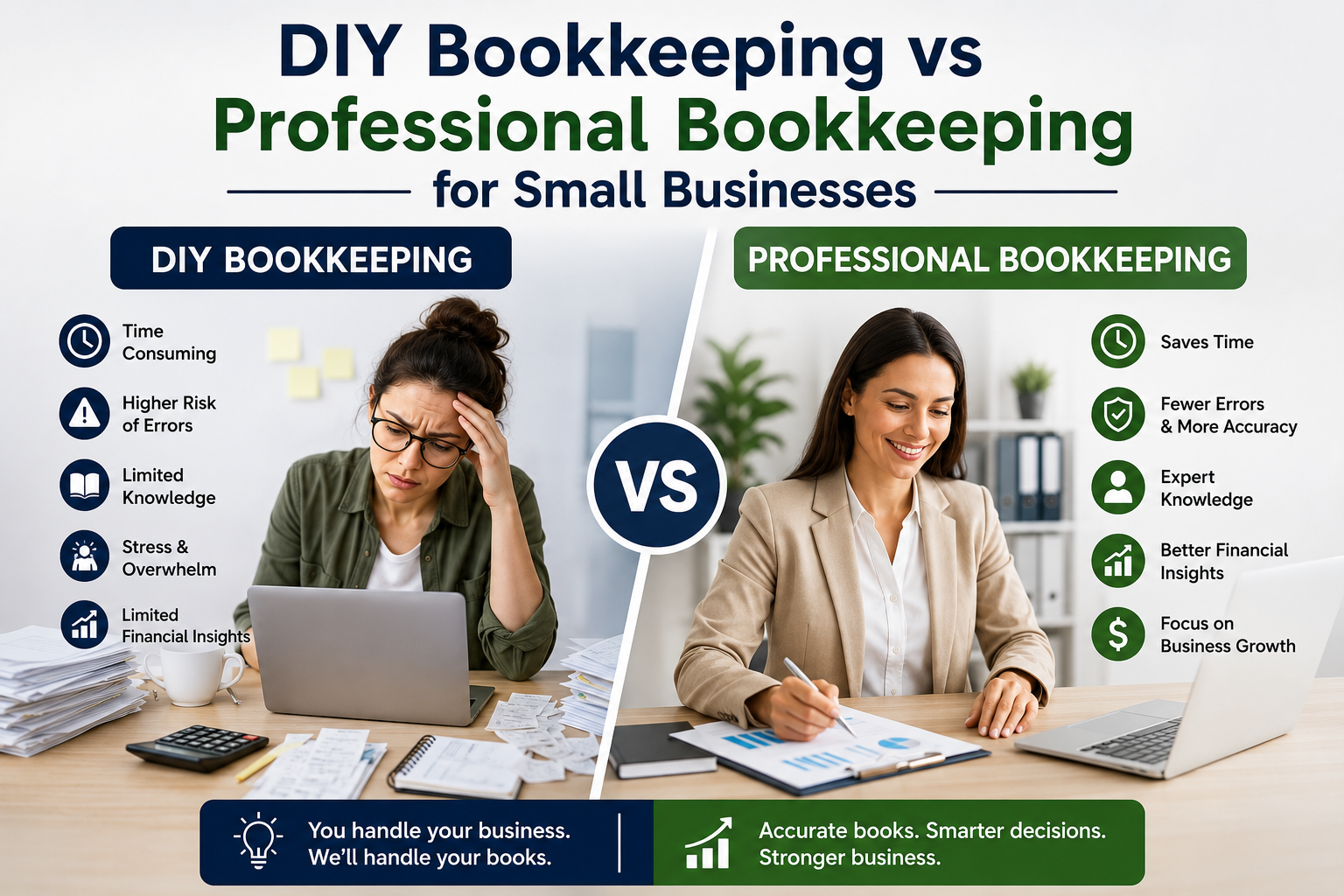
Here is a realistic comparison between DIY bookkeeping and professional bookkeeping support:
| DIY Bookkeeping | Professional Bookkeeping Services |
| Lower upfront cost | Greater financial accuracy |
| Time-consuming | Saves business time |
| Higher risk of errors | Organized financial reporting |
| Limited financial insights | Tax-ready records |
| Difficult during growth | Scalable support |
| Manual tracking | Automated systems & reconciliations |
One of the largest hidden costs of DIY bookkeeping is time.
Many business owners spend several hours every week:
- organizing receipts,
- reconciling transactions,
- reviewing invoices,
- correcting reporting errors,
- or preparing for tax filing deadlines.
That time could often be spent on:
- business development,
- client relationships,
- marketing,
- or improving operations.
Professional bookkeeping services for small businesses help reduce financial stress while improving overall organization and visibility.
Hidden Costs of Poor Bookkeeping
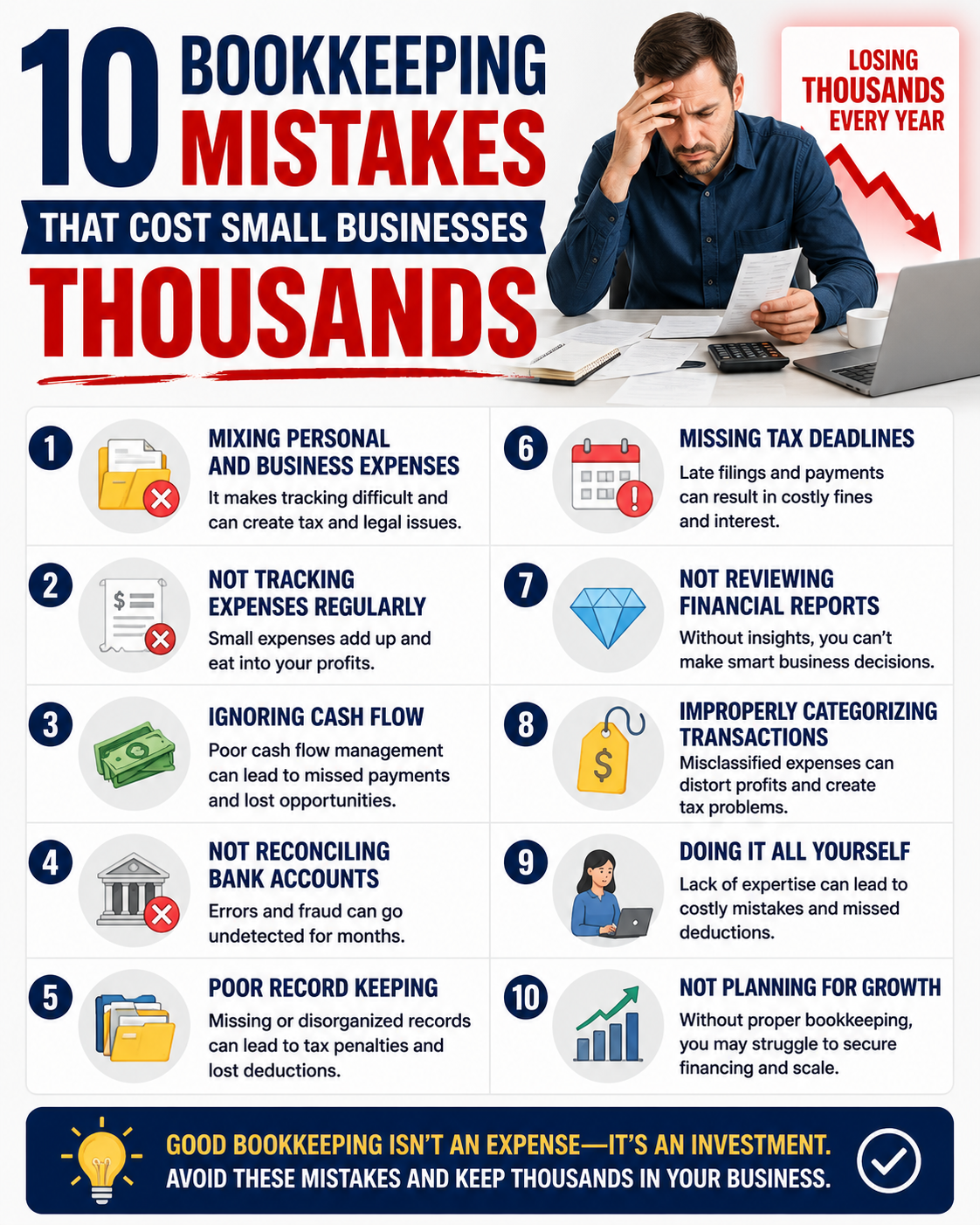
Many business owners focus only on the monthly cost of bookkeeping without considering the financial damage poor bookkeeping can create over time.
Disorganized records can lead to:
- inaccurate reports,
- missed deductions,
- payroll mistakes,
- cash flow confusion,
- tax penalties,
- late payments,
- and compliance issues.
In many cases, businesses do not realize bookkeeping problems exist until:
- tax season arrives,
- invoices go unpaid,
- or cash shortages begin affecting operations.
Poor financial organization also impacts:
- loan applications,
- business forecasting,
- investment opportunities,
- and long-term planning.
For growing companies, bookkeeping is not simply about recording transactions. It creates financial clarity that supports smarter business decisions.
Businesses with organized financial systems are often able to:
- monitor profitability more accurately,
- identify unnecessary spending,
- improve budgeting,
- and prepare for growth with greater confidence.
Why More Small Businesses Are Outsourcing Bookkeeping in 2026
Outsourced bookkeeping continues to grow because many small businesses now prefer flexible financial support without hiring a full-time internal employee.
Hiring an in-house bookkeeper often includes additional expenses such as:
- salary,
- employee benefits,
- training,
- software costs,
- office space,
- and payroll taxes.
Outsourced bookkeeping firms provide professional support while reducing those overhead expenses.
For many businesses, outsourced bookkeeping services offer:
- predictable monthly pricing,
- scalable support,
- experienced financial management,
- and improved reporting accuracy.
This approach is especially valuable for:
- contractors,
- consultants,
- agencies,
- retail businesses,
- restaurants,
- healthcare providers,
- and eCommerce companies.
At Thank Heavens Bookkeeping, many businesses seek outsourced support because they want cleaner financial systems without the stress of handling everything internally.
Services such as:
- bookkeeping clean ups
- accounts payable management
- accounts receivable services
- payroll services
- and tax-ready paperwork
help businesses maintain more organized operations year-round.
How Professional Bookkeeping Supports Tax Preparation
One of the biggest advantages of professional bookkeeping is improved tax readiness.
Businesses with disorganized records often struggle during tax season because:
- expenses are uncategorized,
- documents are missing,
- reconciliations are incomplete,
- or financial reports are inaccurate.
This frequently leads to:
- rushed tax filing,
- missed deductions,
- accounting delays,
- and additional stress for business owners.
Professional bookkeeping helps maintain:
- organized transaction records,
- accurate income tracking,
- categorized expenses,
- and clean financial statements throughout the year.
This creates a much smoother process when preparing tax documents.
Many bookkeeping firms now offer ongoing tax-ready bookkeeping services so businesses are not forced into last-minute financial cleanup work before filing deadlines.
Signs Your Business May Need Professional Bookkeeping Support
Many business owners wait too long before seeking bookkeeping help.
Below are some common signs that a business may benefit from professional bookkeeping services:
- You are behind on reconciliations
- Tax season feels overwhelming every year
- Cash flow is difficult to track
- Payroll management is becoming stressful
- You are unsure about profitability
- Invoices are not being tracked properly
- Vendor payments are becoming disorganized
- Financial reports are inaccurate or incomplete
- You spend too much time managing finances manually
When bookkeeping becomes reactive instead of organized, financial problems usually become more expensive to correct later.
Professional bookkeeping creates structure that helps businesses operate more efficiently.
How to Choose the Right Bookkeeping Company
Not all bookkeeping providers offer the same level of support.
Before choosing a bookkeeping company, businesses should evaluate:
- industry experience,
- communication standards,
- reporting quality,
- software expertise,
- service flexibility,
- and long-term scalability.
A reliable bookkeeping partner should provide:
- transparent pricing,
- consistent reporting,
- organized financial processes,
- and ongoing support as the business grows.
It is also important to choose a bookkeeping company that understands the needs of small businesses specifically.
At Thank Heavens Bookkeeping, businesses across:
- York
- Lancaster
- Harrisburg
- Bel Air
- Westminster
- Frederick
- and Towson
work with bookkeeping professionals to maintain organized records, improve financial visibility, and reduce the operational stress that often comes with managing business finances internally.
Final Thoughts
So, how much does bookkeeping cost for small businesses in 2026?
For most businesses, monthly bookkeeping costs generally range between $300 and $2,500, depending on:
- transaction volume,
- payroll requirements,
- reporting complexity,
- and overall business activity.
While some businesses attempt to manage finances independently, professional bookkeeping services often provide long-term value through:
- cleaner financial organization,
- improved reporting accuracy,
- better tax preparation,
- and stronger operational visibility.
The true value of bookkeeping is not simply keeping records organized. It helps businesses understand where money is going, identify financial problems early, and make more informed decisions as the company grows.
For many small businesses, investing in accurate bookkeeping is significantly less expensive than dealing with the consequences of financial disorganization later.
Frequently Asked Questions
How much do bookkeeping services cost per month?
Most small businesses spend between $300 and $2,500 monthly on professional bookkeeping services depending on business size and financial complexity.
Is outsourcing bookkeeping worth it?
Yes. Outsourced bookkeeping helps businesses reduce administrative workload, improve reporting accuracy, and maintain cleaner financial records without hiring full-time staff.
What is included in bookkeeping services?
Professional bookkeeping services often include:
- transaction categorization,
- reconciliations,
- payroll support,
- accounts receivable,
- accounts payable,
- expense tracking,
- and tax-ready reporting.
Can bookkeeping help with tax preparation?
Yes. Organized bookkeeping helps businesses maintain accurate financial records, making tax filing faster, easier, and more accurate.
What industries benefit most from bookkeeping services?
Nearly every business benefits from bookkeeping, but industries with higher transaction activity such as retail, construction, healthcare, restaurants, and eCommerce often require more advanced financial management support.